What are the early signs of cataract and when is surgery needed?
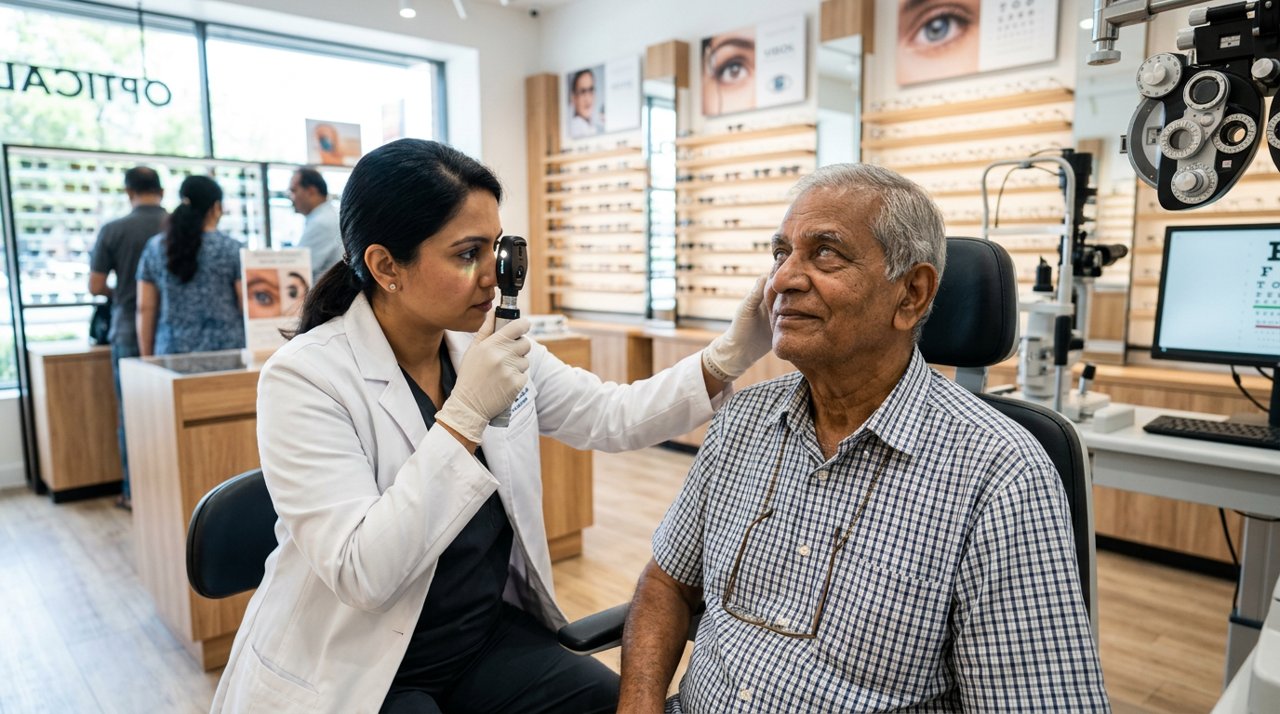
The early signs of cataract are slowly cloudy or blurry vision, glare around lights at night, colours looking faded and frequent changes in glasses power. Surgery is usually considered when cataract starts to interfere with daily life, such as reading, driving or recognising faces, and the decision is made by an ophthalmologist, not by waiting for the cataract to become fully ripe.
What a cataract is
The natural lens inside the eye is clear. With age, injury, diabetes, long steroid use or some eye diseases, proteins in the lens clump and make it cloudy, so less light reaches the retina. It is the leading cause of treatable blindness in India, and most cases are age related, starting after about 50-60.
Early signs to notice
- Vision like looking through a dirty or foggy window
- Halos and glare from headlights and street lights at night, which can make driving in Lucknow traffic uncomfortable
- Colours looking yellowish or washed out
- Needing more light to read
- Double vision in one eye
- Your spectacle number changing again and again
- In some people, near vision seems to improve for a while (called second sight)
Is it only age
Not always. Diabetes, smoking, long sun exposure without UV protection, eye injury, steroids and family history raise the risk. Babies and young people can also have cataracts and need urgent specialist care.
Do glasses fix cataract
New glasses can help in the early stage by sharpening vision for some time. But glasses cannot remove the cloudy lens. Once the cataract is dense enough to affect your daily tasks, the only treatment is surgery.
When is surgery needed
- When blur or glare affects reading, work, driving or safe walking
- When the cataract makes other eye problems hard to examine or treat
- When the lens becomes swollen or causes other problems, as advised by the surgeon
You do not have to wait until the cataract is completely mature. Modern surgery replaces the cloudy lens with a clear artificial lens, usually as a short day-care procedure. Your ophthalmologist will explain lens options and risks.
Protect your eyes
- Wear UV-protective sunglasses outdoors
- Control blood sugar and blood pressure
- Do not smoke
- Avoid using steroid eye drops without a doctor
- Get an eye check every year after 40
Frequently asked questions
Can cataract be cured with eye drops?
No proven drops remove a cataract. Surgery is the treatment.
Does cataract come back after surgery?
The lens is replaced, so the same cataract does not return. Some people later get a cloudy capsule behind the lens, which a quick laser can clear.
Can I use my phone and TV with cataract?
Yes, but it will be harder. Screens do not cause cataract.
Is cataract surgery safe?
It is one of the most commonly performed surgeries and generally has a high success rate, but every surgery has risks. Your surgeon will discuss them.
Which doctor should I see?
Cataract surgery is done by an eye surgeon (ophthalmologist). An optometrist tests your vision and guides you to a trusted eye specialist when surgery may help.
How ORINvue can help
Every eye test at ORINvue is done by our qualified optometrist, Khushboo Gangwar: a complete vision and eye-health check in 10–15 minutes, free with every package. If your eyes need medical treatment or surgery, she guides you to a trusted eye specialist. We also update your glasses before and after surgery, with most single-vision glasses ready in 24 hours, a free remake within 7 days and free adjustment and cleaning for life. Packages are fixed and all-inclusive: ORIN Basic ₹999, Smart ₹1,999 (blue-cut), Premium ₹3,499 (thin 1.60 blue-cut), Progressive ₹4,999 and Kids Shield ₹1,499.
Read our guide: https://orinvue.netlify.app/eye-health/cataract.html .
Information only, not medical advice.
About ORINvue
ORINvue is an optical store opening in December 2026 in Lucknow's Kalyanpur / Vikas Nagar area, open daily 10 AM to 10 PM. It was founded by Abhay Kumar to give Lucknow families honest eye tests and fixed, all-inclusive glasses packages. Visit https://orinvue.netlify.app for details.
Book a free eye test
More answers: Eye Health Guide by ORINvue · Optical & spectacles Q&A
Related questions
What is the difference between an optometrist and an ophthalmologist?
An optometrist is a trained eye care professional who tests vision, prescribes spectacles and contact lenses, and screens for eye problems. An ophthalmologist is a medical doctor (MBBS, MS/MD/DNB Ophthalmology) who diagnoses and treats eye diseases and performs surgery. At ORINvue, every eye test is done by our qualified optometrist, Khushboo Gangwar; if your eyes need medical treatment or surgery, she guides you to a trusted eye specialist.
How often should I get my eyes tested?
Most adults should have an eye test once a year, or sooner if vision changes. Children are best checked every 6 to 12 months, especially with long study and screen hours. People with diabetes, glaucoma in the family, or anyone over 40 should follow their eye doctor's advice, which is usually a yearly check that includes eye pressure and retina examination.
Can I get my eyes tested if I have a red or painful eye?
It is better to see an eye doctor first. A red, painful or sticky eye may be an infection or inflammation that needs treatment, and power measured during an eye problem may not be accurate. Once your eye has healed, you can have a spectacle eye test. At ORINvue, our optometrist Khushboo Gangwar will guide you to a trusted eye specialist first, and test your eyes for glasses once they have healed.
Is −0.25 or −0.50 power worth wearing glasses for?
It depends on your needs. Very low power may not need glasses all the time, but some people notice clearer vision for driving, the classroom board or night-time with even a small correction. Small astigmatism can also cause strain on screens. Your optometrist will advise whether glasses will help you.
How long does a proper eye test take?
A complete spectacle eye test usually takes about 10 to 15 minutes. It includes a machine reading (auto-refraction), fine-tuning of your power with trial lenses by an optometrist, a near-vision check for people over 40, and a basic check of how your eyes work together. Medical eye examinations by an ophthalmologist with dilation take longer.
Ask ORINvue a question
Eyes, glasses, lenses ya kids eye care se juda koi bhi sawaal likhiye. ORINvue roz reader questions ka jawaab yahin publish karta hai.